Fabric Insights
Circular Knitting vs Flat Knitting vs Warp Knitting: What’s the Difference?
Knitted fabrics are used across almost every apparel category, from T-shirts and sweatshirts to sweaters, activewear, lingerie and lace garments. However, not all knitted fabrics are produced in the same way.
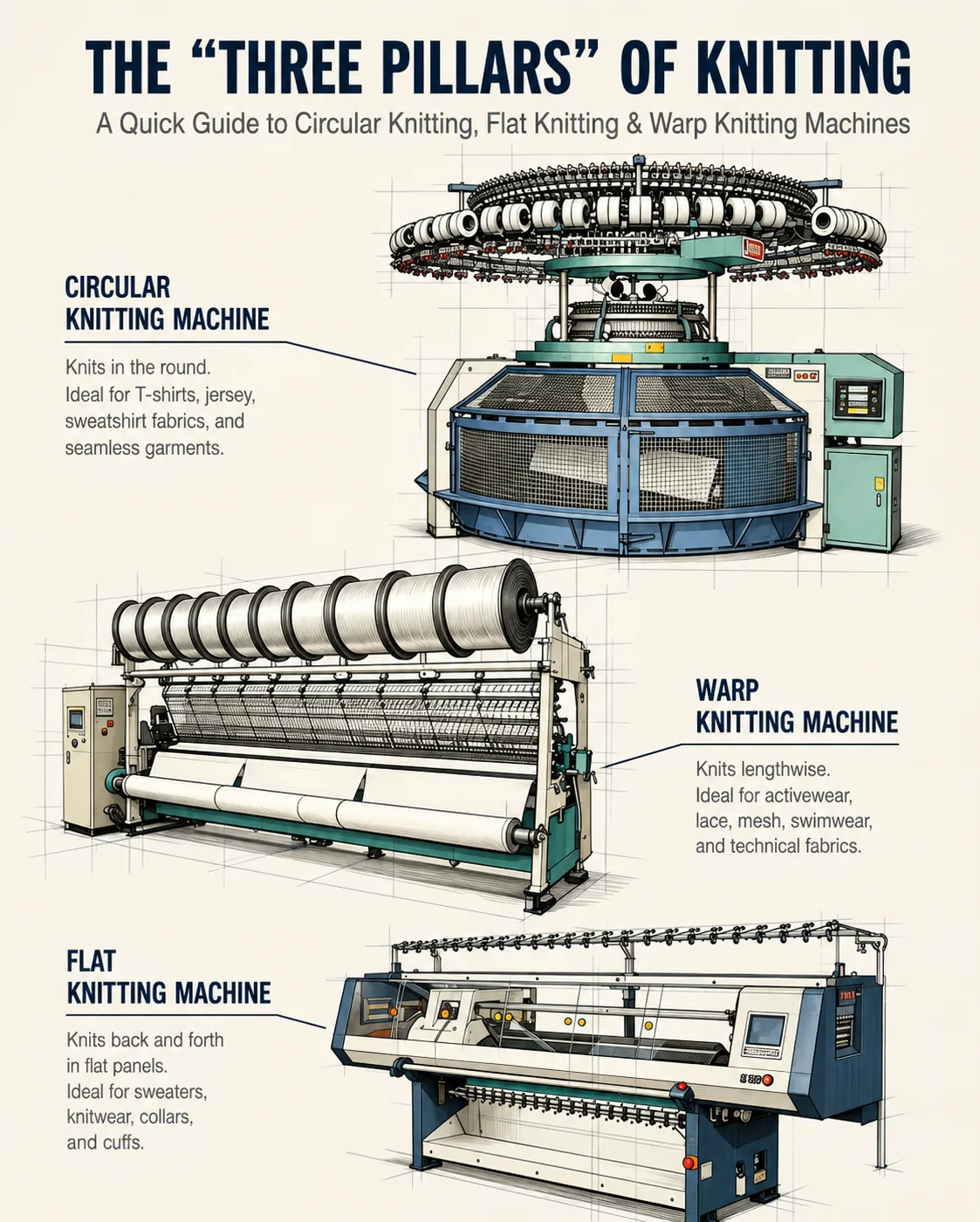
The three most common knitting technologies are circular knitting, flat knitting and warp knitting. Each uses a different production method, resulting in distinct fabric structures, performance characteristics and garment applications.
Understanding the difference between circular knitting, flat knitting and warp knitting helps brands, designers and sourcing teams select the most suitable fabric construction for each collection.
Circular Knitting Machine
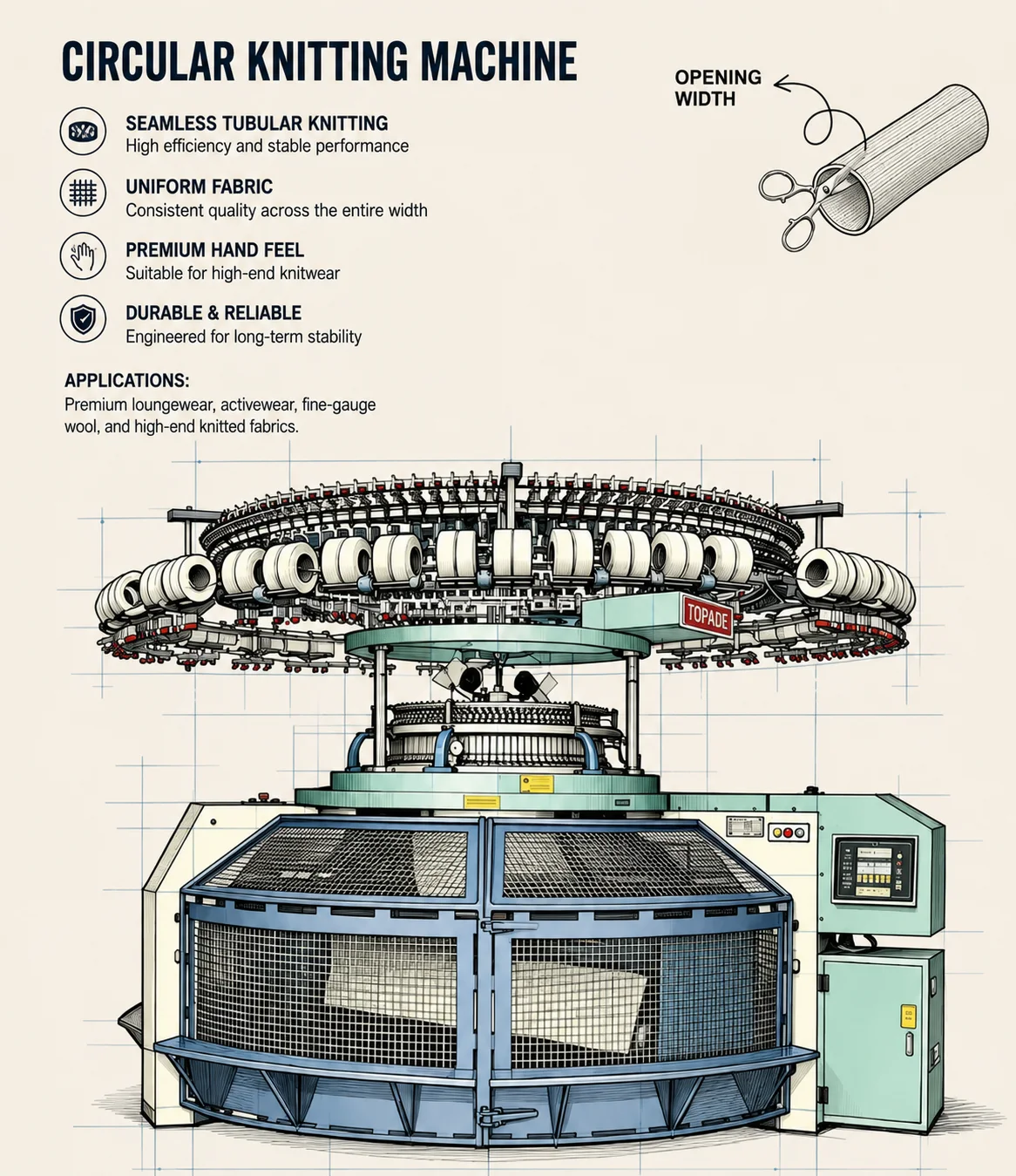
Circular knitting machines produce fabric in a continuous tubular form using needles arranged around a cylinder. This is one of the most widely used knitting technologies in the apparel industry.
Key Advantages
- High production efficiency
- Seamless tubular fabric construction
- Soft and comfortable hand feel
- Consistent fabric quality
- Suitable for a wide range of yarn compositions
Common Fabric Types
- Single jersey
- Double jersey
- Rib
- Interlock
- French terry
- Ponte
- Waffle
- Air layer
Typical Applications
Circular knitted fabrics are widely used for:
- T-shirts
- Sweatshirts and hoodies
- Loungewear
- Sportswear
- Casualwear
- Dresses
- Children’s wear
Because of its flexibility and efficiency, circular knitting is the preferred solution for many commercial knit fabrics. You can see how Topade supports knit production in our Manufacturing Center.
Flat Knitting Machine
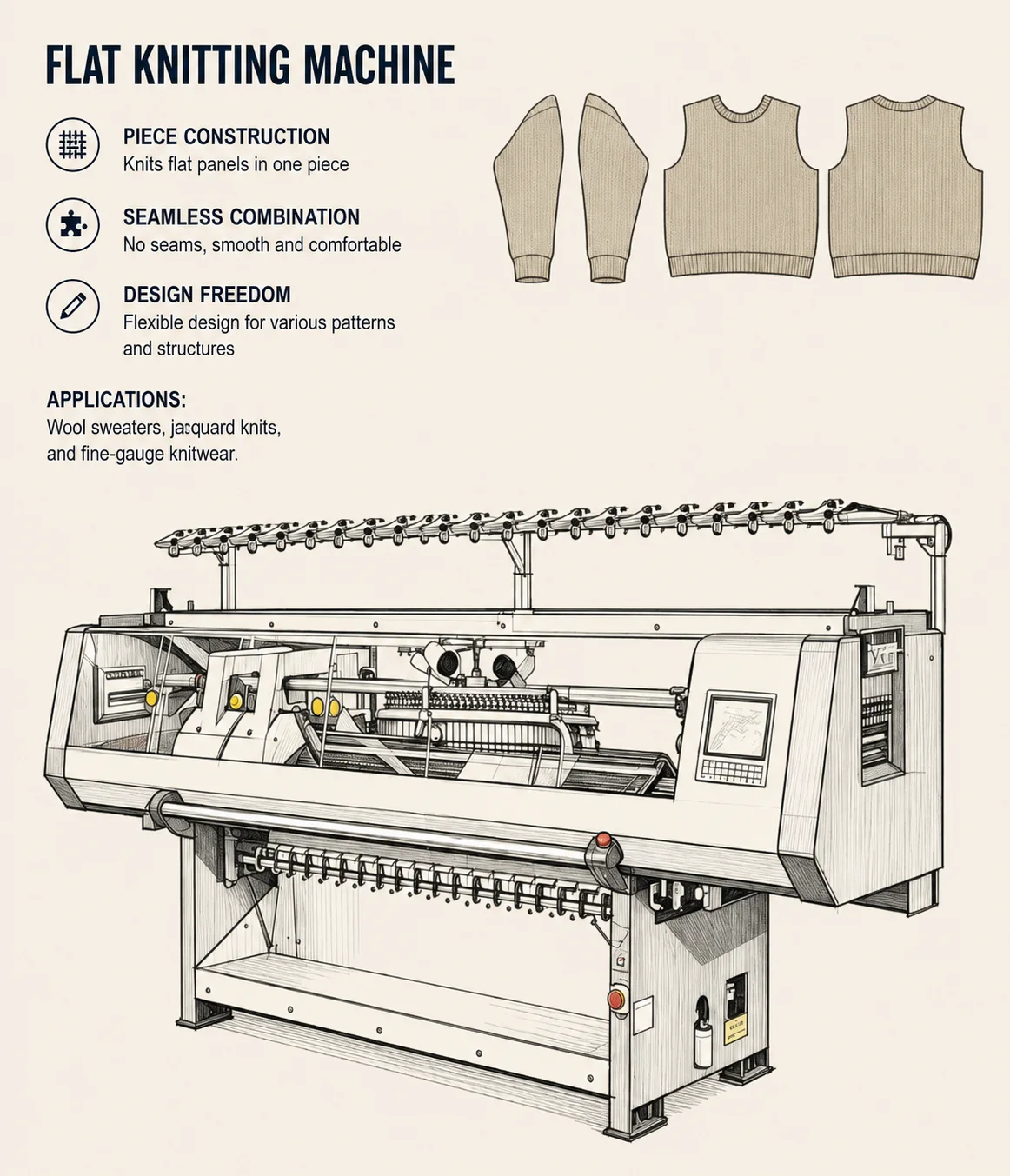
Unlike circular knitting, flat knitting machines knit fabric panel by panel instead of producing continuous fabric rolls.
Each garment component—such as the front panel, back panel or sleeves—can be knitted directly into shape before assembly.
Key Advantages
- Panel knitting with accurate shaping
- Excellent design flexibility
- Complex stitch structures
- Fully fashioned garment construction
- Reduced material waste
Common Products
- Sweaters
- Cardigans
- Knit dresses
- Jacquard knitwear
- Cable-knit sweaters
- Fine-gauge knitwear
Flat knitting allows designers to create sophisticated textures and garment silhouettes that are difficult to achieve with circular knitting.
Warp Knitting Machine
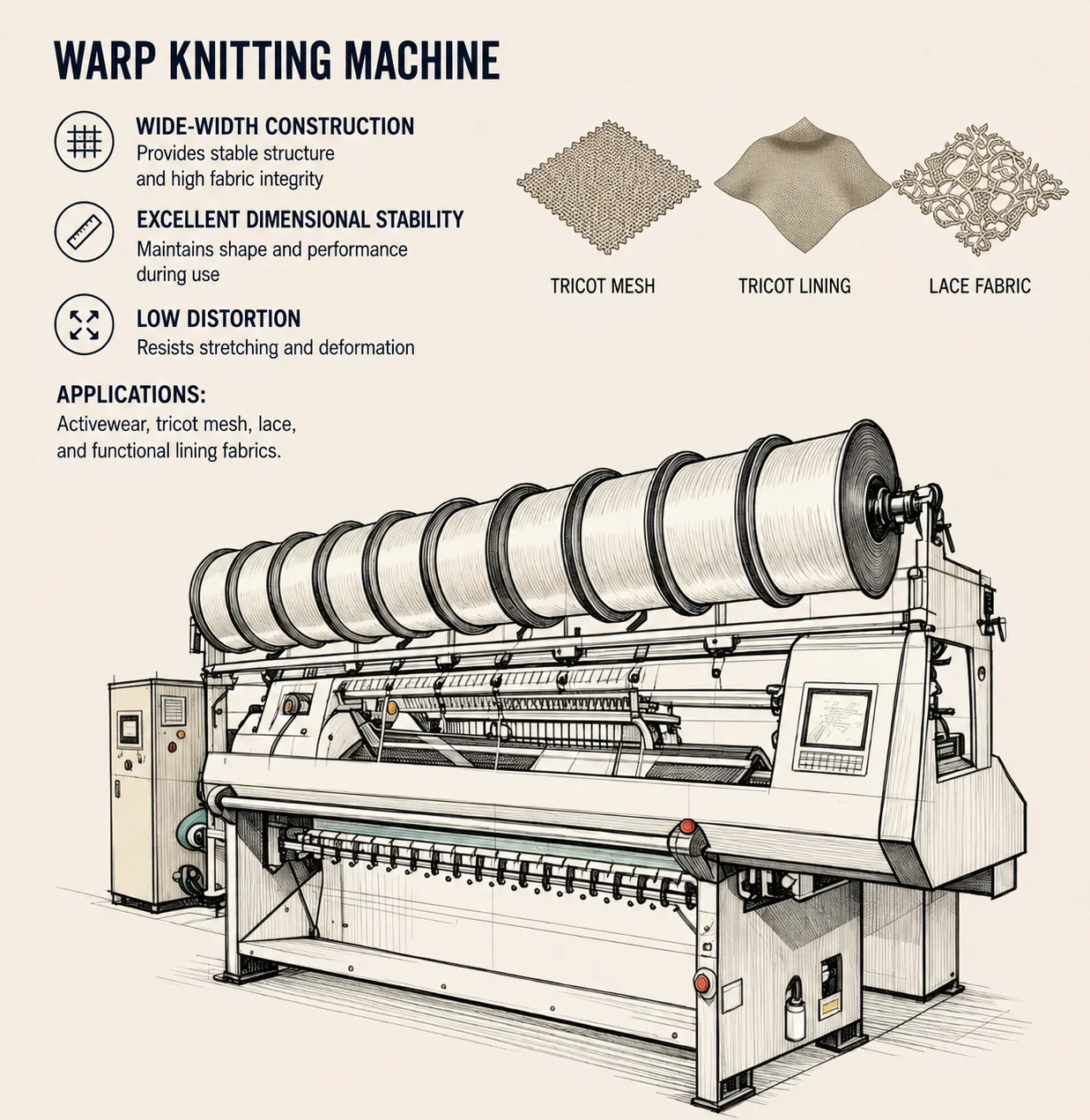
Warp knitting differs significantly from weft knitting. Instead of feeding one yarn across the width of the fabric, each needle is supplied with its own yarn from a warp beam.
This creates fabric with excellent dimensional stability and supports high-speed production.
Key Advantages
- Stable fabric structure
- Excellent dimensional stability
- Low distortion
- High productivity
- Good durability
- Suitable for technical fabrics
Common Fabric Types
- Tricot
- Raschel
- Mesh
- Lace
- Spacer fabric
- Functional linings
Typical Applications
Warp-knitted fabrics are commonly used for:
- Activewear and sportswear
- Lingerie
- Swimwear
- Mesh garments
- Lace fabrics
- Functional textiles
- Automotive textiles
- Medical textiles
Warp knitting is widely used wherever stability, durability and technical performance are priorities.
Circular Knitting vs Flat Knitting vs Warp Knitting
| Feature | Circular Knitting | Flat Knitting | Warp Knitting |
|---|---|---|---|
| Fabric form | Continuous tubular fabric | Individual garment panels | Continuous open-width fabric |
| Production speed | Very high | Moderate | Very high |
| Design flexibility | High | Very high | High |
| Fabric stability | Moderate | High | Very high |
| Best for | Jersey, sweatshirts and casualwear | Sweaters and engineered knitwear | Sportswear, mesh, lace and technical fabrics |
Which Knitting Technology Should You Choose?
The best choice depends on your product category, design requirements and target performance.
- Choose circular knitting if you need soft, comfortable and commercially efficient fabrics for everyday apparel.
- Choose flat knitting when creating sweaters or engineered knitwear with shaped garment panels and complex stitch structures.
- Choose warp knitting when dimensional stability, durability or technical performance is essential.
Each technology plays an important role in modern textile manufacturing, and many apparel collections combine fabrics produced by different knitting methods.
Topade Textile: Supporting Knit Fabric Development
At Topade Textile, we specialize in knit fabric development for women’s fashion, casualwear and performance apparel.
Our development capabilities include:
- Circular knitted fabrics
- Fashion knit structures
- Functional yarn combinations
- Fabric engineering
- Sample development
- Bulk production support
- Quality inspection
Whether you’re developing a lightweight jersey, premium sweatshirt fabric or functional performance knit, our team works closely with customers from initial sampling through bulk production.
Looking for the right knit fabric for your next collection?
Contact Topade Textile to discuss your development requirements and discover knit fabric solutions tailored to your market.